
Fuelled by Pfizer, Triana enters the clinic

The industry’s first ALK degrader starts its first human study.
The industry’s first ALK degrader starts its first human study.
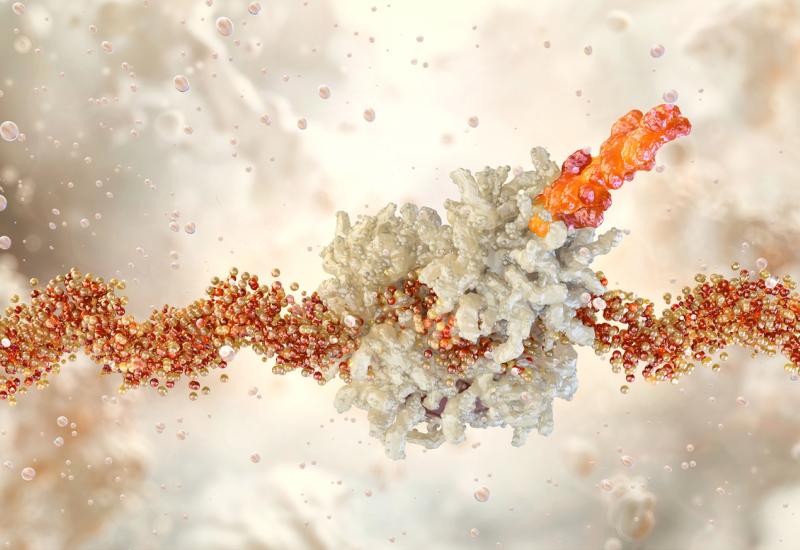
Three months after securing its latest Pfizer-backed private financing round Triana Biomedicines has taken its first pipeline asset, the ALK degrader TRI-611, into clinical studies. Pfizer is notable for having bankrolled Triana through equity and licensing activity alike, though TRI-611 doesn’t appear to be one of the assets to which the big pharma group has rights.
TRI-611 features among the latest new listings on the clinicaltrials.gov registry, which is heavy on cell therapies. One of these belongs to another private US biotech, Moonlight Bio; that company only recently came out of stealth mode, and like Triana is entering human trials for the first time, though it appears to be less well endowed financially.
While Triana’s latest venture capital raise, a series B last December, brought in $120m, Moonlight appears only to have secured seed financing, amounting to some $14m, since being founded three years ago. In 2022 Triana raised its first significant round of private financing, closing a $110m series A.
Both rounds involved key backing from Pfizer, which separately paid Triana $49m in a collaboration to develop “molecular glue” degraders in several disease areas. Triana also has a degrader collaboration with Johnson & Johnson, but nothing has been disclosed about the targets being pursued under either deal.
As such, the entry of TRI-611 into the clinic is relevant to the big pharma players largely for endorsing Triana’s technology, rather than concerning an asset in which they have a direct interest. The target is interesting too: while OncologyPipeline reveals numerous ALK inhibitors in development across the industry, TRI-611 is the only degrader hitting this target.
Cell therapies
For its part, Moonlight aims to overcome significant obstacles, including T-cell exhaustion and poor T-cell proliferation, to achieve the holy grail of developing a Car-T therapy that works in solid tumours.
And its first-in-human entrant, ML261, will offer the first clues as to whether Moonlight’s technology has a chance. ML261 is a Car-T therapy against DLL3, and is to be tested in small-cell lung cancer, but its uniqueness lies in it being armoured with Card11-PIK3R3 gene fusion, something that has preclinically been linked to enhanced signalling, cytokine production and antitumour efficacy.
Recently disclosed first-in-human studies*
| Project | Mechanism | Company | Trial | Scheduled start |
|---|---|---|---|---|
| EB-DT-CAR-NK | Dual-target HER2/MUC1/ROR1 Car-NK | Beijing Biotech/ Essen Biotech | Breast cancer | 2 Feb 2026 |
| EB-DT-NK-UC101 | Dual-target Nectin-4/HER-2 Car-NK | Beijing Biotech/ Essen Biotech | Urothelial carcinoma | 2 Mar 2026 |
| Unnamed | GD2 x B7-H3 Car-NK | Beijing Biotech | GD2+ve or B7-H3+ve paediatric neuroblastoma | 2 Mar 2026 |
| TRI-611 | ALK degrader | Triana Biomedicines | ALK+ve NSCLC | 11 Mar 2026 |
| Super CAR-T | GPC3 Car-T | Guangzhou FineImmune | GPC3+ve hepatocellular carcinoma | 20 Mar 2026 |
| DT101 | Undisclosed in vivo Car-T | TCellTech | Haematological malignancies | 15 Apr 2026 |
| ML261 | Card11-PIK3R3 fusion armoured DLL3 Car-T | Moonlight Bio | Spectral-1, r/r SCLC or select neuroendocrine carcinoma | May 2026 |
| GB-5267 | IL-18 armoured MUC16 Car-T | Generate:Biomedicines | Platinum-resistant ovarian cancer | 15 Jun 2026 |
Note: *these projects were first listed on the clinicaltrials.gov database between 20 and 25 Mar 2026.
Other cell therapies newly into clinical trials include TCellTech’s DT101. While this Car-T therapy’s target is undisclosed, the project is in vivo, an approach that has attracted takeover activity from Lilly, Gilead, AstraZeneca and others; with DT101 there now appear to be 20 industry-sponsored clinical trials of in vivo Car-T therapies.
In the ex vivo space Guangzhou FineImmune is advancing a Car against the popular solid tumour target GPC3, while Generate:Biomedicines is hitting MUC16 with GB-5267. The latter company is in the spotlight for having raised huge sums from venture financiers, and recently filed for a public listing, though its lead project lies outside oncology.
Finally, Beijing Biotech has been making a significant push into unusually designed trials of Car-NK therapies, and the latest listing reveal three more studies, involving projects hitting HER2, MUC1, ROR1, Nectin-4, GD2 and B7-H3. Two of these appear to be Essen Biotech’s, but the link between the companies is unclear.
1338