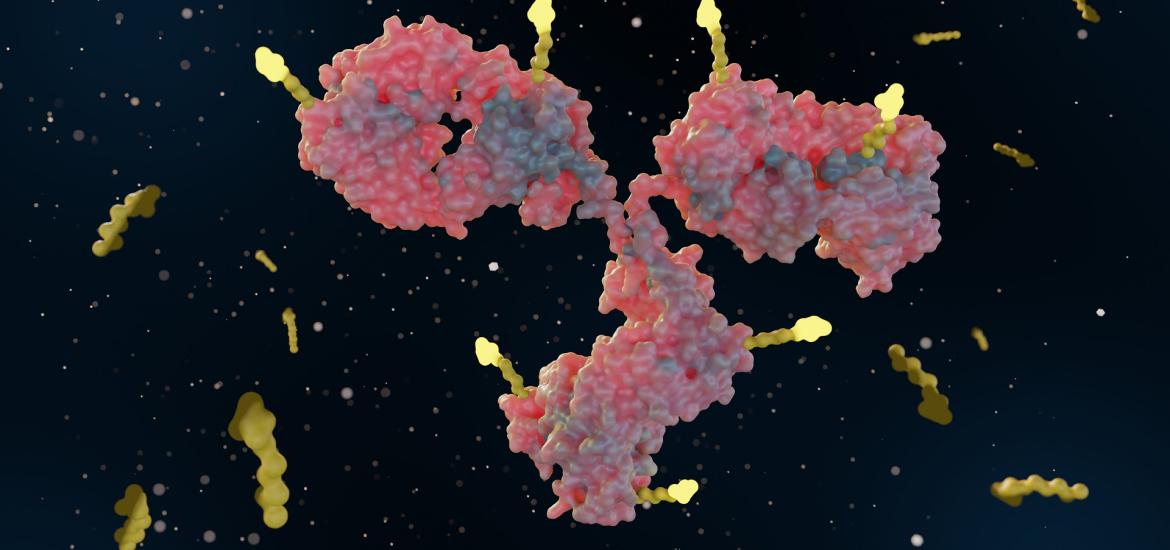
A theory that's fast gaining traction as more becomes known about the burgeoning field of antibody-drug conjugates is that patients treated with an ADC can relapse not only through loss of the target antigen, but also by developing resistance to the payload that an ADC uses. Behind this logic lies the development of ADCs that use not one but two distinct payloads. Now one such dual-payload ADC, CrossBridge Bio's CBB-120, looks to be headed for the clinic after its developer closed a $10m venture financing round. OncologyPipeline reveals several other dual-payload ADCs, in development at companies including Adcoris, Hummingbird and Sutro, but all are still preclinical, so CrossBridge has a chance to be the first into human trials. For now CrossBridge isn't disclosing the precise payloads CBB-120 uses, beyond saying they comprise an exatecan and ATR inhibitor, but the group tells ApexOnco that it's also working on other combinations with follow-on projects. CBB-120's target antigen, meanwhile, is TROP2, which coincidentally is also the target of dual-payload ADCs being developed by Adcoris, BioRay and GeneQuantum.
Dual-payload ADC projects (all preclinical)
| Company | Project | Target antigen | Payload 1 | Payload 2 |
|---|
| Adcoris Biopharmaceutical | ADC2202 | HER2 | Undisclosed | Undisclosed |
| ADC2192 | TROP2 | Undisclosed | Undisclosed |
| CrossBridge Bio | CBB-120 | TROP2 | Exatecan | ATR inhibitor |
| BioRay | BR113 | TROP2 | Topo1 inhibitor | Immune stimulator |
| GeneQuantum | Unnamed | TROP2 | Topo1 inhibitor | Immune stimulator |
| Alphamab | JSKN021 | 2 undisclosed | Undisclosed | Undisclosed |
| JSKN023 | 2 undisclosed | Undisclosed | Undisclosed |
| Hummingbird | HMBD-802 | HER2 | Topo1 inhibitor | ATR inhibitor |
| Sutro | Unnamed | Undisclosed | TLR agonist | Undisclosed |
| BrickBio | Unnamed | Undisclosed | Undisclosed | Undisclosed |