Crescent moves to close the bispecific gap

Cross-licensing pact brings in SKB105, and hands off China rights to CR-001 before first-in-human studies.
Cross-licensing pact brings in SKB105, and hands off China rights to CR-001 before first-in-human studies.
In a PD-(L)1/VEGF bispecifc arena increasingly defined by speed and first-mover advantage, Crescent, one of the players that is lagging behind the leaders, has signed a deal aimed at sharpening the differentiation of its own anti-PD-1 x VEGF programme, CR-001.
The biotech is handing $80m up front to China’s Kelun Biotech for global rights to SKB105, an ADC targeting integrin beta-6 that it plans to pair with CR-001. The tie-up has a curious pairing in the shape of an apparently separate licensing deal, under which Kelun gains rights to CR-001 in China.
This second deal will see Kelun pay Crescent $20m up front, meaning that the net fee for the US biotech is $60m. It's not clear why this cross-licensing arrangement has been spelled out this way, but presumably for accounting reasons each deal will be treated separately.
As for future payments, Kelun could earn up to $1.25bn in milestones plus tiered middle single-digit to low double-digit royalties, and could receive extra cash if Crescent is acquired or sublicenses SKB105. And Crescent could receive a further $30m in milestones and tiered low to mid-level single-digit royalties from Kelun on CR-001 sales.
Mirroring Pfizer
The most advanced anti-integrin beta-6 ADC in development is Pfizer's sigvotatug vedotin, which is now in two phase 3 studies, one in first-line lung cancer in combination with Keytruda, and the other in relapsed non-squamous NSCLC where it's being tested as monotherapy.
Pfizer itself is active in PD-1 x VEGF bispecifics, through PF-08634404, which it licensed from 3SBio for $1.25bn. Just last month Pfizer started a phase 1/2 trial combining PF-08634404 with sigvota-V, so Crescent/Kelun's efforts appear to be a mirror of the big pharma group's approach.
Crescent plans to take SKB105 into a first-in-human trial early next year. According to OncologyPipeline there are only a few other anti-integrin beta-6 ADCs in development, including Sutro's STRO-006 and Shanghai Affinity Biopharmaceuticals' IMD-3857, but apart from sigvota-V all are still preclinical.
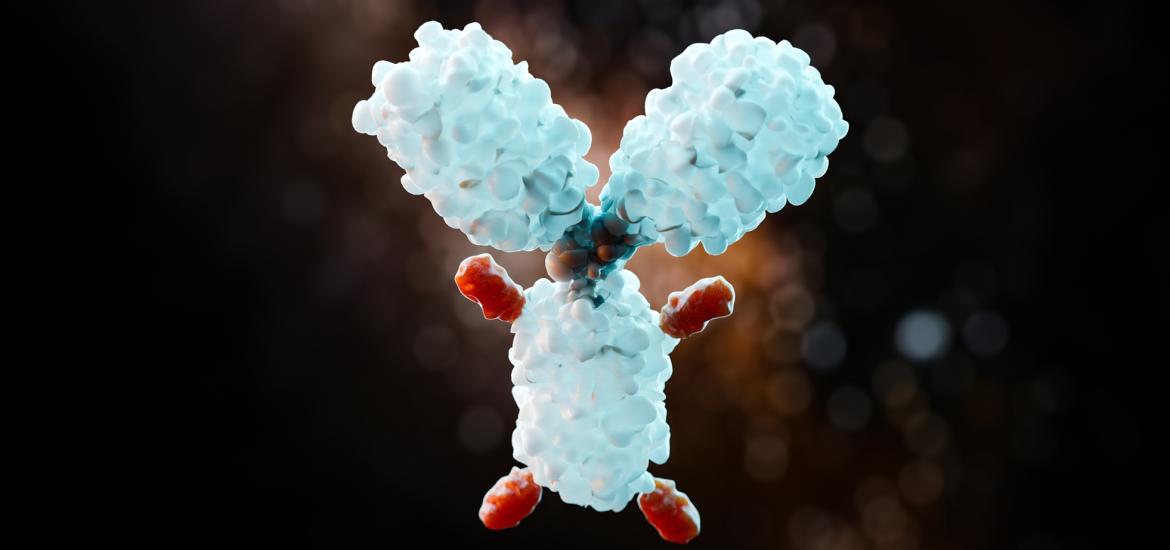
CR-001 was originally engineered by Paragon Therapeutics, and combines blockade of PD-1 and VEGF in a tetravalent bispecific format that has been said to share the “same design” as Akeso/Summit’s high-profile project ivonescimab. Paragon then spun it out into the privately held Crescent, before the latter merged with GlycoMimetics, a listed entity, retaining the Crescent name.
Crescent expects to start a first-in-human trial of CR-001 in the first quarter of 2026, with combination studies involving SKB105 to follow.
Selected anti-PD-(L)1 x VEGF deals
| Project | Seller | Buyer | Financials | Date |
|---|---|---|---|---|
| Ivonescimab (AK112) | Akeso | Summit | $500m up front; up to $5bn future payments; ex-China rights | Dec 2022 |
| Pumitamig (BNT327) | Biotheus | BioNTech | $55m up front; up to $1bn future payments; ex-China rights; BioNTech later acquired Biotheus for $800m | Nov 2023 |
| Palverafusp Alfa | InstilBio | ImmuneOnco | $50m up front; up to $2bn future payments; ex-China rights | Aug 2024 |
| MK-2010 (LM-299) | LaNova Medicines | Merck & Co | $588m up front; up to $2.7bn future payments | Nov 2024 |
| PF-08634404 | 3SBio | Pfizer | $1.25b up front; up to $4.8bn future payments; ex-China rights | May 2025 |
| Pumitamig (BNT327) | BioNTech | BMS | $1.5b up front; up to $9.6bn future payments; 50/50 share | Jun 2025 |
| CR-001 | Crescent | Kelun | $20m up front; up to $30m; China rights | Dec 2025 |
Source: OncologyPipeline.
2182