
MHNCS 2026 – J&J and Bicara face off

But is Rybrevant deep enough, and does ficerafusp use the right pivotal dose?
But is Rybrevant deep enough, and does ficerafusp use the right pivotal dose?
The first results testing Johnson & Johnson’s Rybrevant in front-line head and neck cancer have backed the company’s decision to take this drug into a phase 3 trial, Origami-5, in this setting. However, on some metrics the data might lack clout, and questions have been asked as to whether sufficiently deep responses are being achieved for Rybrevant to be competitive.
Sellside analysts covering Bicara Therapeutics pounced at the chance to highlight that company’s corresponding data for ficerafusp alfa, which they argued made Rybrevant look underwhelming. But Bicara has its own issues, to which a new one can now be added: ficerafusp’s pivotal trial uses what no longer appears to be Bicara’s optimal dosing schedule.
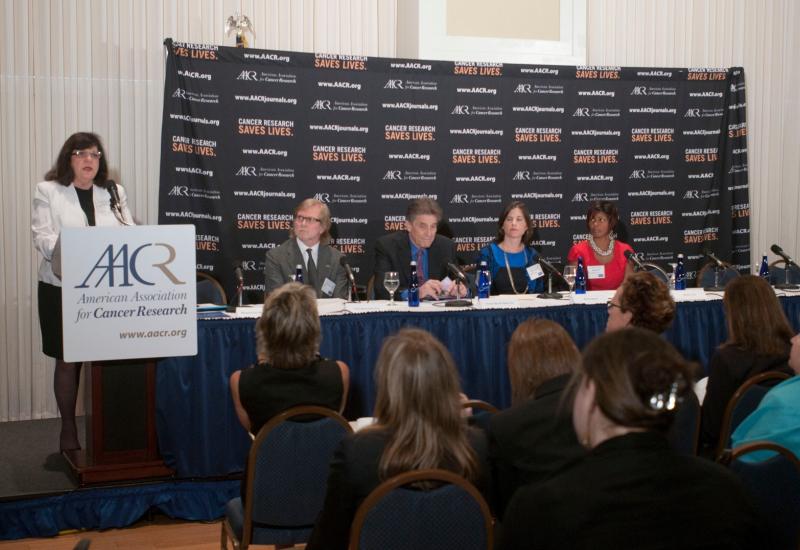
Both sets of results, from cohort 2 of J&J’s Origami-4 trial and from a new dosing arm of a phase 1 study run by Bicara, were presented at a plenary session of the Multidisciplinary Head and Neck Cancers Symposium. A third key player in this space, Genmab’s petosemtamab, didn’t feature at the meeting, but on previous data it might now look the best.
Origami-4
The J&J data came from the phase 1/2 Origami-4 trial, whose cohort 1 had previously shown promise for Rybrevant monotherapy in head and neck cancer patients who had previously received chemo and a PD-(L)1 inhibitor.
In the meantime J&J has started the first-line Origami-5 trial, testing Rybrevant on top of Keytruda and chemo in patients irrespective of PD-L1 expression; Keytruda plus chemo is the standard of care here, based on the Keynote-048 study. However, the MHNCS data concerned PD-L1-positive patients only, a setting in which Keytruda monotherapy is approved.
As monotherapy in PD-L1-positives Keytruda scored an ORR of just 19%, and median PFS of 3.2 months in Keynote-048, and against these numbers the new data from Origami-4 cohort 2, testing Rybrevant plus Keytruda, do look competitive: ORR of 56% ORR, and mPFS of 7.7 months.
So far so good, but analysts want to see how Rybrevant might hold up against newcomers beyond Keytruda, and some pointed to the fact that most of J&J’s 56% ORR was driven by partial responses, with the CR rate being only 10%. This apparent lack of depth could let in Bicara, whose ficarafusp previously showed a 54% ORR – a result that came with a 21% CR rate.
That was presented at last year’s ASCO conference, and concerned the 1.5g weekly ficerafusp dose that Bicara took forward into the pivotal Fortifi-HN01 trial a year ago.
What dose for Bicara?
Given that decision it seems curious why the company is still tinkering with dosing: its phase 1 data at MHNCS concerned a new dose, 2g every other week, which Bicara described as “exploratory”.
This showed a numerical falling off versus 1.5g weekly, with ORR of 48%; however, the CR rate was higher, 26%, so overall the datasets were comparable. Jones Research’s Soumit Roy said the Bicara results showed the potential for ficerafusp to be best in class, while Mizuho’s Joseph Catanzaro went as far as to write that J&J’s data looked underwhelming, at least relative to Rybrevant monotherapy results in the second line.
The big question is what Bicara intends to do with this 2g less frequent dosing, given that it’s already committed to 1.5g weekly in phase 3. The group said it was now advancing yet another regimen – loading followed by every-three-week maintenance – to “optimise efficacy, safety and schedule”.
It stressed that there would be no change to the pivotal Fortifi-HN01 trial, and all it sought was to have loading/maintenance data in hand in time for potential approval.
An elephant in the room for both datasets is the anti-EGFR x LGR5 MAb petosemtamab (ficerafusp hits EGFR x TGFβ MAb, while Rybrevant is anti-EGFR x cMet). In PD-L1-positive, first-line patients petosemtamab has shown ORRs of 66% in HPV-negative and 50% in HPV-positive disease; the Rybrevant and ficerafusp datasets both concern HPV-negatives, and Bicara has given up on the HPV-positive space.
Petosemtamab was originated by Merus, and secured an $8bn buyout for that company by Genmab last September.
Cross-trial comparison in PD-L1+ve, HPV-ve, 1st-line head & neck cancer
| Rybrevant + Keytruda | Ficerafusp alfa + Keytruda | Keytruda | |
|---|---|---|---|
| Company | Johnson & Johnson | Bicara | Merck & Co |
| Study | Origami-4, cohort 2 | Ph1, additional cohort* | Keynote-048 |
| ORR | 56% (22/39) | 48% (13/27) | 19% (49/257) |
| CR rate | 10% (4/39) | 26% (7/27) | 5% (13/257) |
| mPFS | 7.7mth | NR | 3.2mth |
| mOS | NR (9mth OS rate 80%) | NR | 12.3mth (9mth OS rate 70%) |
Note: *ficerafusp dosed at 2g every 2 weeks; pivotal dose is 1.5g weekly. Source: MHNCS & OncologyPipeline.
1661