Replimune has already started pivotal development of its first-generation oncolytic virus, and now clinicaltrials.gov has revealed a planned phase 2/3 study for its next-generation project.
The company’s lead asset, RP1 (vusolimogene oderparepvec) is being developed for post-checkpoint inhibitor melanoma; meanwhile its follow-on, RP2, is targeted at the smaller niche of uveal melanoma. Here, Immunocore’s Kimmtrak has been approved – but, unlike Immunocore, Replimune won’t be restricted to the most common HLA type, because of the projects’ different modalities.
Replimune’s phase 2/3 trial, which is due to start in January 2025, will test RP2 plus Opdivo, versus Opdivo plus Yervoy, in checkpoint inhibitor-naive metastatic uveal melanoma patients.
Uveal melanoma is thought to affect around 1,000 patients in the US each year. PD-(L)1 inhibitors aren’t approved for uveal melanoma, and these drugs have shown limited activity here, according to Replimune. An uncontrolled investigator-sponsored study of Opdivo plus Yervoy found, among 33 patients, an ORR of 18%, median PFS of 5.5 months, and median OS of 19.1 months.
Meanwhile, a phase 1 trial of RP2 has reported an ORR of 29% among 17 uveal melanoma patients. Responses were seen in one of three patients receiving RP2 monotherapy, and four of 14 subjects getting RP2 plus Opdivo.
Notably, 70% of patients had received both prior anti-PD-1 and anti-CTLA-4 therapy, so it’s possible that the numbers could improve in the upcoming checkpoint inhibitor-naive trial.
Not HLA restricted
Also encouragingly for Replimune, responses to RP2 were seen in patients positive and negative for HLA-A2*02:01. As RP2 is an oncolytic virus it’s designed to spur a broad immune response, while Immunocore’s Kimmrak, because it’s based on a T-cell receptor, is restricted to HLA-A2*02:01-positive patients, the most common subtype among the Caucasian population.
However, Replimune isn’t alone here, with Ideaya Biosciences also claiming broad utility of its PKC inhibitor darovasertib. That project is in a phase 2/3 trial in HLA-A2-negative metastatic uveal melanoma (where it’s being given alongside Pfizer’s Xalkori), and a phase 2 study in (neo)adjuvant uveal melanoma.
Other contenders include Aura Biosciences, which has the phase 3 Compass trial under way, testing its virus-like drug conjugate belzupacap sarotalocan (bel-sar) in choroidal melanoma, a subtype of uveal melanoma.
Immatics has also said it might include uveal melanoma patients in a phase 2/3 study of its anti-PRAME T-cell receptor project IMA20, although presumably like Kimmtrak that will also be limited to patients with a specific HLA subtype.
RP1 vs RP2
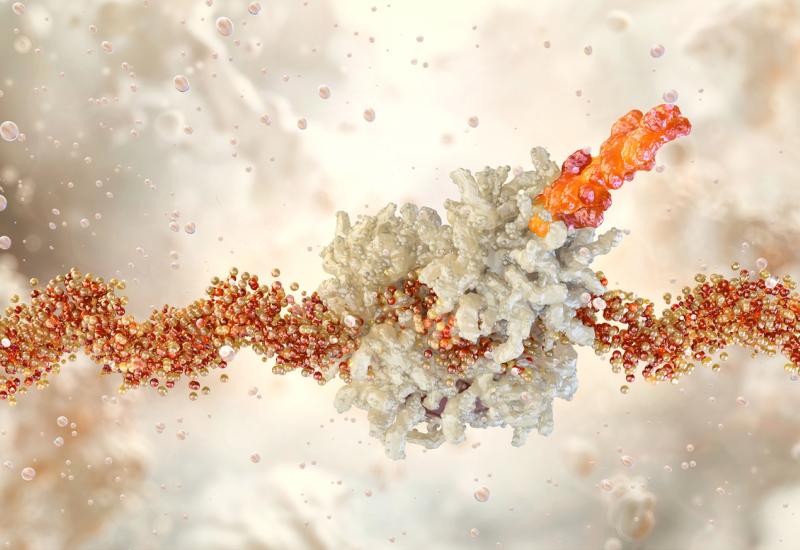
Replimune’s RP1 and RP2 are both based on a herpes simplex virus engineered to express GM-CSF and a fusogenic protein, GALV-GP R-. RP2 additionally expresses an anti-CTLA4 antibody-like molecule, and is designed to target less immunologically responsive tumour types.
Last month Replimune dosed the first patient in the confirmatory Ingyte-3 trial of RP1; the company is planning an accelerated approval filing based on the Ignyte study, data from which were reported in June.
Since then the group’s market cap has climbed to $700m. But, with big tests remaining, it might be premature to declare victory for oncolytic viruses.
Replimune’s oncolytic virus candidates
| Project | Description | Status |
|---|
| RP1 (vusolimogene oderparepvec) | HSV expressing GALV-GP R- & GM-CSF | Filing planned H2 2024 in post-PD-1 melanoma, based on Ignyte; 1st pt enrolled in confirmatory Ignyte-3 Aug 2024 |
| RP2 | HSV expressing GALV-GP R-, GM-CSF & anti-CTLA-4 | Ph1 uveal melanoma data at ASCO 2024; ph2/3 begins Jan 2025 |