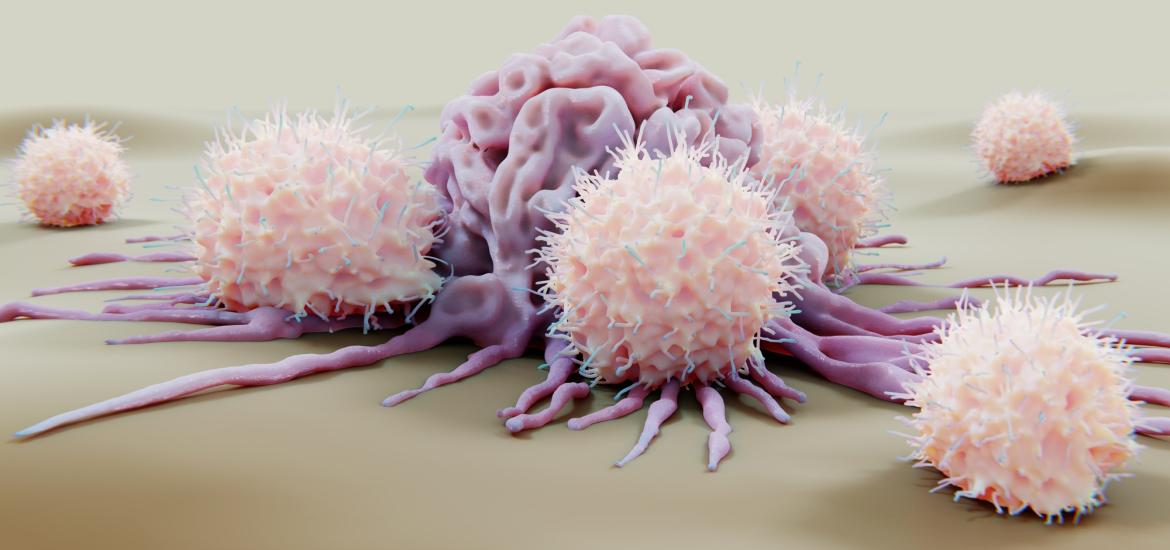
NK-cell engagers were once positioned as a promising extension of the immuno-oncology playbook, but instead the field has been characterised more by attrition than arrival. A handful of companies remain committed to the modality, but a conspicuous trail of discontinued programmes paint a more cautious picture.
The latest setback comes from BeOne Medicines, which has halted development of its anti-MUC1 NK-cell engager MAb BGB-B3277. In an update posted on clinicaltrials.gov, the company stated that the first-in-human trial had been stopped owing to a “sponsor decision”.
The CD16A-engaging bispecific was designed to target the membrane-proximal epitope of MUC1 in an effort to avoid the sink effect, minimising binding to soluble MUC1. But, like many other programmes, the effort has stalled before generating any meaningful data.
MUC1 itself has long been a frustrating target. Despite mixed and often negative clinical results over the years, drug developers continue to pursue MUC1, including variations on this theme such as tumour-associated MUC1, in the belief that improved antibody design or more potent payloads might finally unlock its potential.
Other players
Among these is Daiichi Sankyo, which is developing a TA-MUC1-targeting ADC, sacomitatug deruxtecan. This, it recently emerged, uses an analogue of the antibody gatipotuzumab, acquired for $133m from Glycotope last year.
Meanwhile, Merck KGaA is charting a different bispecific course. Rather than pursuing NK-cell engagers the company is focusing on dendritic cells and macrophage activation with M0324, an anti MUC1 x CD40 project that recently entered the clinic. This marks the company’s second bispecific targeting MUC1 to enter the clinic; its previous candidate, an anti-EGFR x MUC1 ADC, M1231, was discontinued because of “strategic considerations”.
However, the company has not abandoned that approach altogether. In 2024 it said it was developing another anti-EGFR x MUC1 ADC using exatecan as a payload rather than the hiasterlin warhead deployed in M1231.
Other groups, including SPARC and Minerva Biotechnologies, also retain programmes against MUC1, according to OncologyPipeline, so despite repeated setbacks both MUC1 and NK-cell engagers remain in play. For now, though, clinical validation continues to prove elusive.
Selected discontinued anti-MUC1 programmes
| Project | Modality | Company | Status |
|---|
| Clivatuzumab tetraxetan | Yttrium-90 based radioconjugate | Gilead (ex Immunomedics) | Development stopped after ph3 trial failure in pancreatic cancer |
| TnMUC1 | Car-T | Gilead (Tmunity Therapeutics originated) | Development stopped owing to unfavourable risk/benefit analysis in ph1 |
| AS1402 | MAb | Antisoma | Development stopped in ph2 |
| GO-203 | Small peptide | XYone Therapeutics | Development stopped in ph2 |
| P-MUC1C-ALLO1 | Car-T | Roche/ Poseida | Development stopped in ph1 |
| M1231 | EGFR x MUC1 ADC | Merck KGaA | Development stopped owing to "strategic portfolio considerations" |
| BGB-B3227 | NK-cell engager | BeOne | Ph1 in solid tumours terminated owing to "sponsor decision" |