AACR 2026 – Merck’s VEGF bispecific reveal

First human data on MK-2010 are imminent.
First human data on MK-2010 are imminent.
The upcoming AACR meeting will be the venue at which Merck & Co will reveal the first clinical data for MK-2010, the anti-PD-1 x VEGF antibody it licensed for $588m up front from LaNova in late 2024. This has emerged from Tuesday’s abstract drop, which has revealed the titles of all the presentations due to be given at next month’s conference.
These also show that a clinical trial plenary will have something of a KRAS focus, with data on D3 Bio’s elisrasib and Revolution’s zoldonrasib, as well as on CCR8, with Gilead revealing what it got when it bought denikitug from Jounce. Meanwhile, MK-2010 features among hotly awaited sessions focusing on first-in-human trial data.
MK-2010 is in the spotlight because it represents Merck’s attempt to get in on the PD-(L)1 x VEGF bispecific act as something of a latecomer; Akeso/Summit’s ivonescimab and BioNTech/Bristol Myers Squibb’s pumitamig are well ahead in clinical trials, and even RemeGen’s RC148 and 3SBio’s PF-08634404, picked up subsequently by AbbVie and Pfizer respectively, are now in pivotal studies.
KRAS plenary
Revolution promises much clinical data at AACR, mostly on its pan-RAS asset daraxonrasib, but a 19 April clinical trial plenary will feature zoldonrasib, its anti-KRAS(on) G12D inhibitor.
The data will be in relapsed lung cancer, but it’s not clear from the abstract title whether they refer to the phase 1/2 RMC-Lung-101 trial – started two years ago, testing various combinations in this cancer, but yet to yield results – or to a phase 1 basket trial. The latter yielded a 28% ORR in relapsed NSCLC, plus many more unconfirmed responses, at last year’s AACR.
D3 Bio’s elisrasib, meanwhile, is a KRAS G12C inhibitor that at AACR 2025 showed a 30% ORR among 20 NSCLC patients who had progressed on first-generation G12C inhibitors, including Lumakras and Krazati. The dataset to be presented at this year’s clinical trial plenary appears to be an update from the same study.
Selected presentations at AACR 2026
| Project | Mechanism | Company | Trial | Abstract |
|---|---|---|---|---|
| 18 April | ||||
| AMG 355 | CCR8 MAb | Amgen | +/- Keytruda in solid tumours | CT003 |
| 19 April | ||||
| Elisrasib | KRAS G12C inhibitor | D3 Bio | NSCLC previously treated with/without KRAS G12C inhibitor | CT020 |
| Zoldonrasib | KRAS(on) G12D inhibitor | Revolution | Pretreated KRAS G12Dm NSCLC | CT021 |
| Zedoresertib + lunresertib | Wee1 inhibitor + PKMYT1 inhibitor | Debiopharm | First-in-human in solid tumours with CCNE1, FBXW7, or PPP2R1A alterations | CT022 |
| 20 April | ||||
| Denikitug | CCR8 MAb | Gilead (ex Jounce) | Solid tumours | CT232 |
| MK-2010 | PD-1 x VEGF MAb | Merck & Co | First-in-human in solid tumours | CT057 |
| Nuzefatide | EphA2 toxin conjugate | Bicycle | Solid tumours | CT063 |
| SGR-3515 | Wee1/PKMYT1 inhibitor | Schrödinger | Solid tumours | CT065 |
The target CCR8 gained some publicity a few years ago given how clinical trials testing MAbs against it were being upsized, but beyond a few early datasets results from human trials remain somewhat limited.
As such, the first data on Gilead’s denikitug, also due at the AACR plenary, should be of interest. The molecule hasn’t yet yielded any human data, but its phase 1 trial is notable for having been upsized from 62 to 412 patients – numbers that among anti-CCR8 MAbs are rivalled only by Bristol’s imzokitug, whose study is now enrolling 949 patients, up from 185.
Gilead bought denikitug from Jounce for $67m in 2022, after first licensing it for $85m and then making a $15m milestone payment.
The CCR8-tageting space is notable for discontinuations as much as for trial expansions, and one asset apparently headed for termination is Amgen’s AMG 355, whose phase 1 trial halted recruitment after just 77 out of a planned 535 patients were enrolled. Perhaps data from this study, due at an AACR clinical minisymposium, will shed more light on the matter.
Another asset that recently changed hands is Repare’s PKMYT1 inhibitor lunresertib, picked up last July by Debiopharm for just $10m. The first-in-human study of this molecule’s combination with the Wee1 inhibitor zedoresertib is another recipient of an AACR plenary slot.
The Wee1/PKMYT1 inhibition strategy, but with a single molecule, is being pursued by Schrödinger with SGR-3515, which will feature at a first-in-human AACR session. Another player here is Acrivon’s ACR-2316. And the anti-EphA2 toxin conjugate nuzefatide should get some attention since just this week becoming Bicycle Therapeutics’ least pipeline asset.
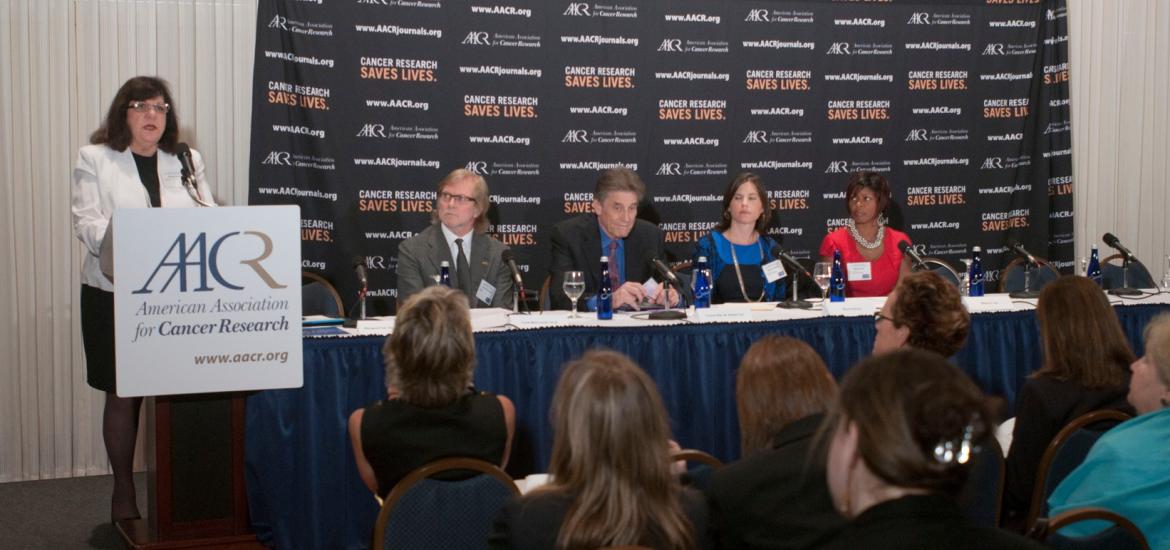
AACR 2026 takes place in San Diego on 17-22 April.
5857