
ASCO-GU – J&J looks to a pasritamig combo

New data with pasritamig plus docetaxel support a recent pivotal start.
New data with pasritamig plus docetaxel support a recent pivotal start.
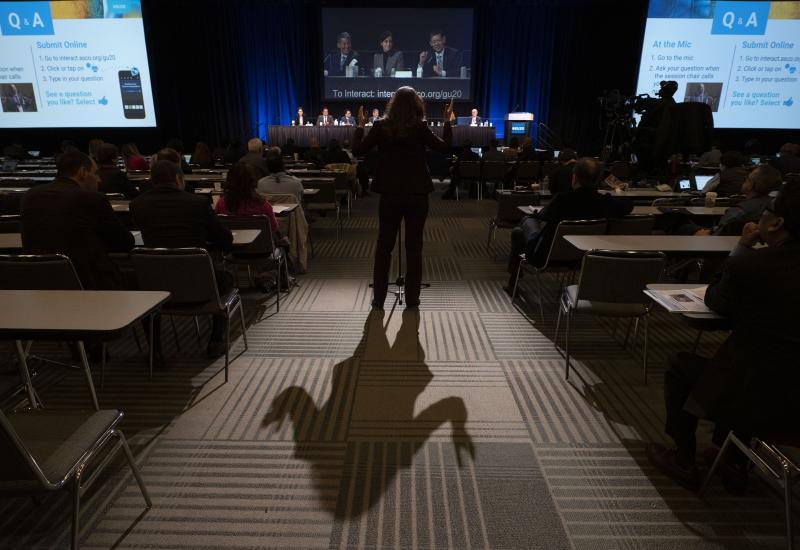
Johnson & Johnson’s anti-KLK2 T-cell engager pasritamig looked good as monotherapy in late-line prostate cancer last year, and now the company is pushing on with a docetaxel combo. J&J reported a 65% PSA50 rate with pasritamig plus docetaxel at ASCO-GU last week, which looks competitive against other prostate cancer hopefuls – and it’s already testing this regimen in a phase 3 trial that started in December.
That study, KLK2-PASenger, is enrolling patients who’ve already received an androgen receptor pathway inhibitor (ARPI), but not yet received chemo – the same setting in which Novartis’s radiopharmaceutical Pluvicto was FDA approved last year. The latest trial adds to KLK2-comPAS, testing pasritamig monotherapy following an ARPI, chemo, Pluvicto and PARP inhibitor, which began in September.
This jump straight from phase 1 to phase 3 shows J&J’s confidence in pasritamig, which is its second shot at hitting KLK2, following troubling toxicity with a radiopharmaceutical project, JNJ-69086420.
However, the group’s phase 3 studies raise questions about pasritamig’s ultimate place in the castrate-resistant prostate cancer landscape, which is getting increasingly competitive. Should the earlier-line KLK2-PASenger succeed, it would surely eliminate the later-line monotherapy setting.
Another question is why KLK2-PASenger hasn’t included Pluvicto as control – the Novartis therapy is limited to PSMA-positive mCRPC, but PSMA expression is usually seen in advanced prostate cancer.
Mono & combo therapy
Notwithstanding these questions, the signs for pasritamig look good. At last year’s ASCO meeting, a phase 1 monotherapy trial found that 42% of 33 patients receiving the go-forward dosing regimen achieved PSA50.
The data presented at ASCO-GU come from a phase 1 trial of pasritamig combined with various agents; the poster focused on the docetaxel combo. This was a later-line trial than KLK2-PASenger: the median number of prior therapies was three, with all patients post-ARPI, 45% post-taxane, and 20% post-Pluvicto.
Across 51 patients and with a cutoff date of 9 December, 33 subjects (65%) achieved PSA50 and 20 (39%) achieved PSA90. Results were even more impressive among 28 taxane-naive patients, with 75% hitting PSA50 and 54% achieving PSA90.
The latter could be more representative of KLK2-PASenger’s population, so J&J will hope these numbers hold up in phase 3, and also translate into a progression-free survival benefit.
Currently, the prostate cancer candidate to beat appears to be Vir’s dual-masked PSMA-targeting T-cell engager VIR-5500, which recently produced a PSA50 rate of 82% as monotherapy in a phase 1 study. True, this was only at selected doses and in just 17 patients, but it was enough to tempt Astellas as a partner.
Janux’s similarly acting JANX007 has seen PSA50 rates slide from 100% in a heavily curated dataset to 73% among 85 patients receiving 2mg or more.
J&J also has other prostate cancer agents, including the androgen receptor-targeting HLD-0915, gained via the $3bn acquisition of Halda, which reported a 59% PSA50 rate among 22 patients completing at least two treatment cycles.
Meanwhile, development of the Ambrx-originated anti-PSMA ADC JNJ-95298177 (ARX517) appears to have stalled, although a J&J spokesperson told ApexOnco that this project was still in play. Notably, a phase 1 trial of JNJ-95298177 plus pasritamig began last year.
As for KLK2, J&J is the only company with clinical-stage assets against this target. It also has another shot with JNJ-75229414, a CAR-T contender – although the phase 1 trial of that asset started in 2021, with no results reported as yet.
Phase 3 trials of pasritamig
| Trial | Setting | Regimen | Primary endpoint | Start date | Corresponding ph1 data |
|---|---|---|---|---|---|
| KLK2-comPAS | Post-ARPI, taxane chemo, Pluvicto and PARPi | + best supportive care, vs best supportive care | OS | Sep 2025 | PSA50 42%; mPFS 7.9mths* |
| KLK2-PASenger | Post-ARPI, pre-taxane chemo | + docetaxel, vs docetaxel + prednisone | rPFS | Dec 2025 | PSA50 65%; PSA90 39%** |
Note: *among 33 pts receiving go-forward dosing regimen (NCT04898634); **n=51 (NCT05818683). Source: ASCO-GU & OncologyPipeline.
576